Category: Blog

Your blog category

  • Will Cheetahs Run in Kutch Again?

    Will Cheetahs Run in Kutch Again?

    The Ghost That Roamed the Salt Flats

    On the edge of memory, in a grassland that time forgot, something ancient is stirring.

    There is a song the Rabari shepherds of Kutch still sing. It doesn’t have a name, exactly — songs like this rarely do. It’s passed from grandmother to grandchild around fires that smell of dried dung and desert wind, and it speaks of a spotted guardian that once moved through the tall grasses like a flicker of gold light. Fast as rumour. Gone before you could be sure you’d seen it.
    They were singing about the cheetah.
    For most of the 20th century, that song was all that remained. No tracks in the salt crust. No amber eyes catching the pre-dawn dark. Just the memory, worn smooth by retelling, of an animal that had once belonged here as surely as the wind belonged to the open plain.
    That absence is about to end.

    A Landscape That Remembers

    Banni. The name itself sounds like something half-swallowed by the earth.
    Spread across 2,618 square kilometres in the Rann of Kutch, a terrain that is neither quite land nor quite sea, Banni is one of those places that resists easy description. It is a saltpan and a savanna at once. In drought years, the ground cracks into pale geometric patterns that stretch to every horizon. In good monsoon years, the wetlands fill, and thousands of migratory birds descend from flyways that arc across continents. Forty species of grass root themselves here. Ninety-nine species of flowering plants bloom briefly, violently, and then are gone.
    It is not dramatic in the way a mountain is dramatic. Its power is subtler, the kind of landscape that takes time to understand, that reveals itself slowly, the way a long silence eventually becomes louder than noise.
    And once, the cheetah called it home.
    Historical records, faded maps, colonial hunting logs, and the oral testimony of communities like the Rabari trace the Asiatic cheetah’s presence across the length of the Indian subcontinent, from Tirunelveli district at the southern tip of Tamil Nadu, north through the Deccan plateau, across the arid zones of Rajasthan and Gujarat, and farther still into Iran, Afghanistan, and the Arabian Peninsula. They were everywhere. Then, in the span of a single century, they were nowhere.
    The last confirmed cheetah in Gujarat was sighted in 1940, near Prabhas Patan. The last one in Kutch was found close to Mandvi taluka, a detail that sits in conservation records with the quiet weight of an ending. The last three in all of India were shot in 1948 by the Maharajah of Surguja State, in eastern Madhya Pradesh. One unconfirmed sighting in Chhattisgarh in 1951. And then, silence.
    Seven decades of silence.

    The Return Begins Elsewhere

    In September 2022, eight cheetahs stepped out of transport crates in Kuno National Park, Madhya Pradesh, blinking into an Indian morning for the first time in living memory. They had come from Namibia, then later from South Africa, African cheetahs standing in for their Asiatic cousins, whose last wild population survives in fragile numbers in Iran.
    It was a moment that moved people in ways they hadn’t expected. Something about watching an animal reclaim a landscape it had been torn from, something about witnessing a restoration rather than merely reading about one, made it feel less like a conservation milestone and more like a correction. Like the land exhaling.
    But Kuno was always meant to be a beginning, not an end.

    Banni Waits

    In Gujarat, officials at the Forest Department had been watching Kuno carefully and thinking about their own grasslands. “Banni was a home of cheetahs in the past,” one officer told The Indian Express. “It is a very good grassland which can be developed to host free-ranging wild cheetahs.”
    That phrase free-ranging carries a weight worth pausing on. It means cheetahs not in enclosures, not under observation lights, but moving through the grass on their own terms, hunting at dawn, navigating territory, becoming, again, what they were always meant to be in this landscape: the apex predator, the ghost, the animal the shepherds sing about.
    Getting there will take time. This is the honest part of the story.
    A breeding centre has been approved for Banni, a carefully managed facility where cheetahs will be raised in conditions designed to prepare them for eventual wild release. Dr Srivastava, principal chief conservator of forests in Gujarat, explains the reasoning plainly: the current prey base in Banni cannot yet sustain free-ranging cheetahs. Chinkara, nilgai, and blackbuck roam the grassland, but not in the density required. So alongside the cheetah breeding programme, Gujarat plans to establish herbivore breeding centres, seeding the prey populations that will make Banni ready.
    It is a patient plan. Ecological restoration always is.

    The Science of Coming Home

    Long before the approval came through, researchers had already been making the case.
    Professor Dr. Jhala, former dean of the Wildlife Institute of India and one of the architects of India’s cheetah reintroduction programme, surveyed Banni as far back as 2012. He found what the landscape itself suggested: open terrain offering the long sightlines a cheetah needs to hunt. Minimal human pressure. Prey species present, if not yet abundant. “There are records of cheetahs having been sighted near Mandvi in Kutch in the 18th century,” Jhala noted. The grassland wasn’t a gamble. It was a homecoming.
    A 2023 study by the Wildlife Institute of India confirmed it: Banni’s ecological features make it one of the most suitable cheetah reintroduction sites in the country.
    But there is a shadow over the grassland that no study can ignore. Prosopis juliflora known locally as gando bawad, the mad tree is an invasive thorny shrub that has been spreading through Banni for decades, replacing native grasses with dense, impenetrable thicket. It is precisely the wrong landscape for a cheetah: a hunter that relies on speed and visibility now confronted with walls of thorns.
    The battle against gando bawad is, in a sense, a precondition for everything else. Clear the invasive species. Restore the native grasses. Build back the prey. And then, slowly, return the predator to its place in the web.

    What a Song Knows

    Conservation, when it is done well, is an act of listening. It listens to data and to ecosystems, yes, but also to older forms of knowledge. To shepherds’ songs. To the name a community gives an animal that has been absent for eighty years, but is still spoken of as a guardian.
    The Rabari of Kutch did not forget the cheetah. They encoded it in culture, in story, in the specific way a song can carry the weight of something that should not have been lost.
    That kind of memory matters. Not just as sentiment, but as ecological data as evidence that an animal and a landscape and a people were once entangled in a relationship that had its own balance, its own logic.
    Banni is not a blank canvas waiting to be written on. It is a manuscript that was interrupted mid-sentence. The breeding centre, the herbivore restoration, and the grassland management are not the creation of something new. They are the resumption of something old.

    The Long Patience

    There will be no dramatic release date to circle on a calendar. No single morning when the gates open and the cheetahs pour into the open plain, and the story is complete.
    Ecological restoration doesn’t work that way. It works the way the monsoon works slowly, incrementally, one season preparing the conditions for the next, until one year the land is ready in ways it wasn’t the year before.
    But somewhere in the Banni grassland, in the light that falls flat and golden across the salt crust in the late afternoon, there is a shape that the landscape has been waiting to fill. A particular kind of movement, fast, low, committed, that the long grasses were designed by evolution to hide and reveal.
    The cheetah’s return to Kutch will not be announced. It will simply happen, one morning, as things that have always belonged somewhere eventually do.
    And perhaps a Rabari grandmother, somewhere, will look up from her fire and feel, without knowing quite why, that the song finally makes sense again.

    “The cheetah breeding centre in Banni Grassland, Kutch, is part of India’s larger Project Cheetah initiative. The programme involves the Wildlife Institute of India, the Gujarat Forest Department, and local communities working in concert to restore one of the subcontinent’s lost ecological relationships.”

    birds documentary ecosystem environmental documentary lake

    Blog Documentary Environmental NEWS
  • The Ghost That Roamed the Salt Flats

    There is a song that the Rabari shepherds of Kutch still sing. It doesn’t have a name, exactly — songs like this rarely do. It’s passed from grandmother to grandchild around fires that smell of dried dung and desert wind, and it speaks of a spotted guardian that once moved through the tall grasses like a flicker of gold light. Fast as rumour. Gone before you could be sure you’d seen it.

    They were singing about the cheetah.

    For most of the 20th century, that song was all that remained. No tracks in the salt crust. No amber eyes catching the pre-dawn dark. Just the memory, worn smooth by retelling, of an animal that had once belonged here as surely as the wind belonged to the open plain.

    That absence is about to end.

    Banni. The name itself sounds like something half-swallowed by the earth.

    Spread across 2,618 square kilometres in the Rann of Kutch — a terrain that is neither quite land nor quite sea — Banni is one of those places that resists easy description. It is a saltpan and a savanna at once. In drought years, the ground cracks into pale geometric patterns that stretch to every horizon. In good monsoon years, the wetlands fill, and thousands of migratory birds descend from flyways that arc across continents. Forty species of grass root themselves here. Ninety-nine species of flowering plants bloom briefly, violently, and then are gone.

    It is not dramatic in the way a mountain is dramatic. Its power is subtler — the kind of landscape that takes time to understand, that reveals itself slowly, the way a long silence eventually becomes louder than noise.

    And once, the cheetah called it home.

    Historical records — faded maps, colonial hunting logs, the oral testimony of communities like the Rabari — trace the Asiatic cheetah’s presence across the length of the Indian subcontinent. From the Tirunelveli district at the southern tip of Tamil Nadu, north through the Deccan plateau, through the arid zones of Rajasthan and Gujarat, and further still into Iran, Afghanistan, and the Arabian Peninsula. They were everywhere. Then, in the span of a single century, they were nowhere.

    The last confirmed cheetah in Gujarat was sighted in 1940, near Prabhas Patan. The last one in Kutch was found close to Mandvi taluka — a detail that sits in conservation records with the quiet weight of an ending. The last three in all of India were shot in 1948 by the Maharajah of Surguja State, in eastern Madhya Pradesh. One unconfirmed sighting in Chhattisgarh in 1951. And then — silence.

    Seven decades of silence.

    The Return Begins Elsewhere

    In September 2022, eight cheetahs stepped out of transport crates in Kuno National Park, Madhya Pradesh, blinking into an Indian morning for the first time in living memory. They had come from Namibia, then later from South Africa — African cheetahs standing in for their Asiatic cousins, whose last wild population survives in fragile numbers in Iran.

    It was a moment that moved people in ways they hadn’t expected. Something about watching an animal reclaim a landscape it had been torn from — something about witnessing a restoration rather than merely reading about one — made it feel less like a conservation milestone and more like a correction. Like the land exhaling.

    But Kuno was always meant to be a beginning, not an end.

    Banni Waits

    In Gujarat, officials at the Forest Department had been watching Kuno carefully and thinking about their own grasslands. “Banni was a home of cheetahs in the past,” one officer told The Indian Express. “It is a very good grassland which can be developed to host free-ranging wild cheetahs.”

    That phrase — free-ranging — carries a weight worth pausing on. It means cheetahs not in enclosures, not under observation lights, but moving through the grass on their own terms, hunting at dawn, navigating territory, becoming, again, what they were always meant to be in this landscape: the apex predator, the ghost, the animal the shepherds sing about.

    Getting there will take time. This is the honest part of the story.

    A breeding centre has been approved for Banni — a carefully managed facility where cheetahs will be raised in conditions designed to prepare them for eventual wild release. Dr. Srivastava, principal chief conservator of forests in Gujarat, explains the reasoning plainly: the current prey base in Banni cannot yet sustain free-ranging cheetahs. Chinkara, nilgai, and blackbuck roam the grassland, but not in the density required. So alongside the cheetah breeding programme, Gujarat plans to establish herbivore breeding centres — seeding the prey populations that will make Banni ready.

    It is a patient plan. Ecological restoration always is.

    The Science of Coming Home

    Long before the approval came through, researchers had already been making the case.

    Professor Dr. Jhala, former dean of the Wildlife Institute of India and one of the architects of India’s cheetah reintroduction programme, surveyed Banni as far back as 2012. He found what the landscape itself suggested: open terrain offering the long sightlines a cheetah needs to hunt. Minimal human pressure. Prey species present, if not yet abundant. “There are records of cheetahs having been sighted near Mandvi in Kutch in the 18th century,” Jhala noted. The grassland wasn’t a gamble. It was a homecoming.

    A 2023 study by the Wildlife Institute of India confirmed it: Banni’s ecological features make it one of the most suitable cheetah reintroduction sites in the country.

    But there is a shadow over the grassland that no study can ignore. Prosopis juliflora — known locally as gando bawad, the mad tree — is an invasive thorny shrub that has been spreading through Banni for decades, replacing native grasses with dense, impenetrable thicket. It is precisely the wrong landscape for a cheetah: a hunter that relies on speed and visibility now confronted with walls of thorns.

    The battle against gando bawad is, in a sense, a precondition for everything else. Clear the invasive species. Restore the native grasses. Build back the prey. And then, slowly, return the predator to its place in the web.

    What a Song Knows

    Conservation, when it is done well, is an act of listening. It listens to data and to ecosystems, yes — but also to older forms of knowledge. To shepherds’ songs. To the name a community gives an animal that has been absent for eighty years but is still spoken of as a guardian.

    The Rabari of Kutch did not forget the cheetah. They encoded it in culture, in story, in the specific way a song can carry the weight of something that should not have been lost.

    That kind of memory matters. Not just as sentiment, but as ecological data — as evidence that an animal and a landscape and a people were once entangled in a relationship that had its own balance, its own logic.

    Banni is not a blank canvas waiting to be written on. It is a manuscript that was interrupted mid-sentence. The breeding centre, the herbivore restoration, the grassland management — these are not the creation of something new. They are the resumption of something old.

    The Long Patience

    There will be no dramatic release date to circle on a calendar. No single morning when the gates open and the cheetahs pour into the open plain and the story is complete.

    Ecological restoration doesn’t work that way. It works the way the monsoon works — slowly, incrementally, one season preparing the conditions for the next, until one year the land is ready in ways it wasn’t the year before.

    But somewhere in the Banni grassland, in the light that falls flat and golden across the salt crust in the late afternoon, there is a shape that the landscape has been waiting to fill. A particular kind of movement — fast, low, committed — that the long grasses were designed by evolution to hide and reveal.

    The cheetah’s return to Kutch will not be announced. It will simply happen, one morning, as things that have always belonged somewhere eventually do.

    And perhaps a Rabari grandmother, somewhere, will look up from her fire and feel — without knowing quite why — that the song finally makes sense again.

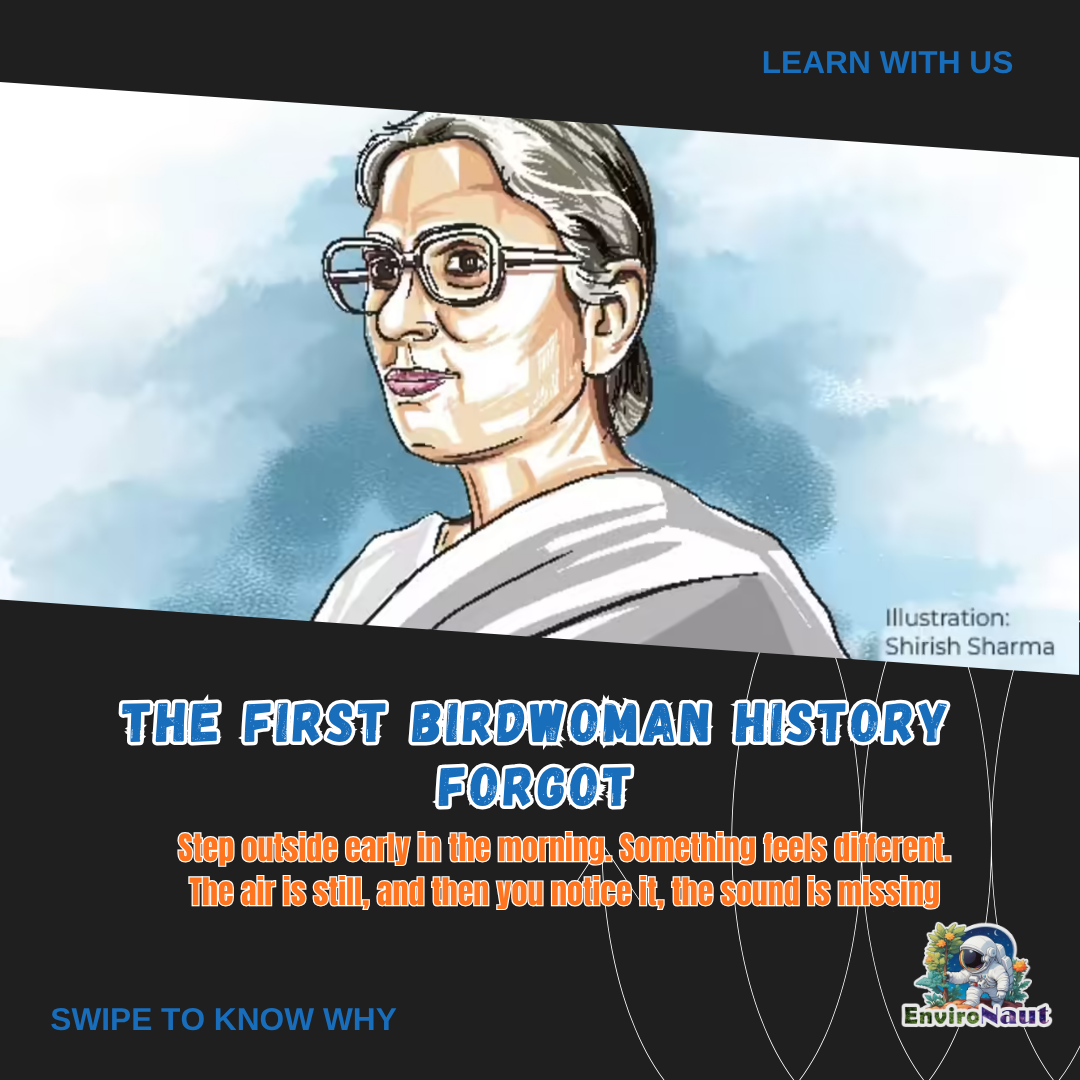
  • The Birdwoman History Almost Forgot

    The Birdwoman History Almost Forgot

    The Birdwoman History Almost Forgot – The Story of Jamal Ara

    Author: Dharmik Bhatt
    Blog Post

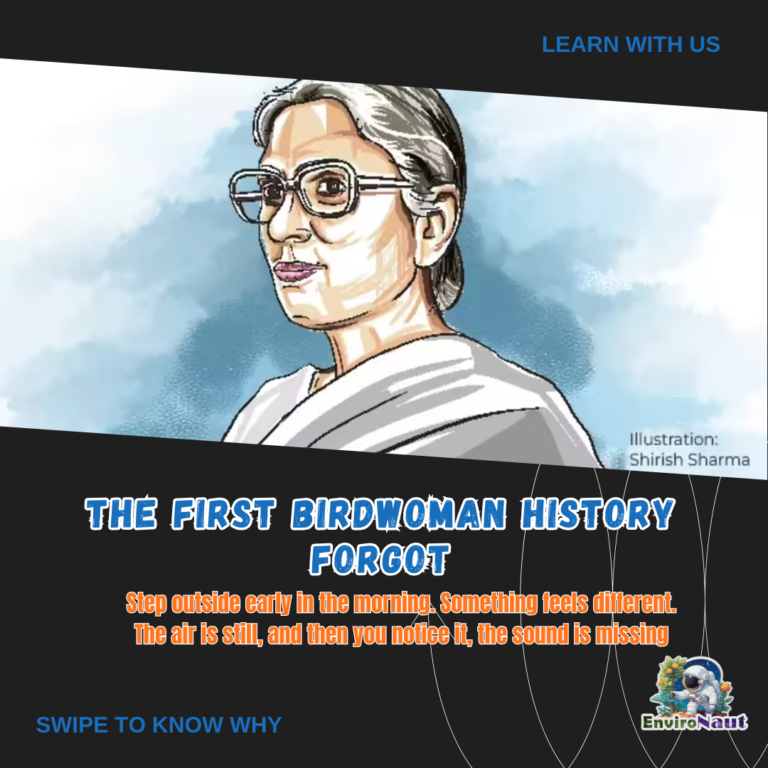
    Step outside early in the morning.

    Before traffic builds. Before conversations begin. Before the world fully wakes up.

    For a few brief moments, birds carry the soundscape of the day. Calls overlap from trees, rooftops, electric wires, ponds, and distant fields. Most of us hear those sounds without thinking much about them. But there was once a woman in India who spent years listening carefully enough to turn those sounds into science.

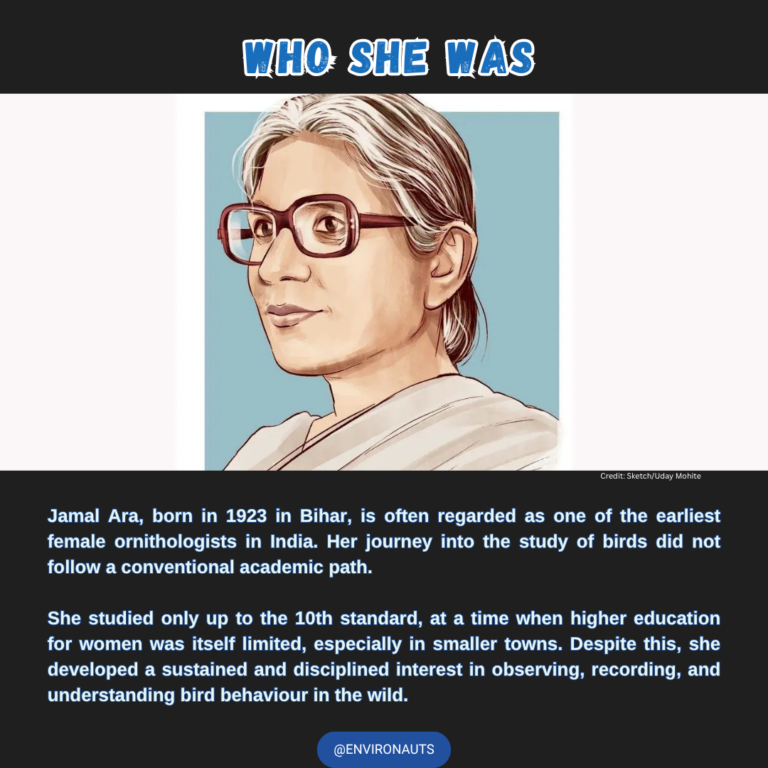
    Her name was Jamal Ara.

    Today, very few people know who she was. In fact, only a single known photograph of her survives. Much of her writing, field notes, and personal archive disappeared long ago. Yet scattered across old journals and historical references is the record of someone who quietly became one of India’s earliest female ornithologists, a woman whom Salim Ali himself reportedly referred to as the country’s first “birdwoman.”

    What makes her story remarkable is not only what she achieved, bu

    t the circumstances in which she achieved it. She was born in Bihar in 1923, during a period when higher education for women remained inaccessible across much of India, especially outside major cities. Jamal Ara studied only up to the 10th standard. By conventional standards, her journey into science should have ended there.Instead, it began.

    Learning Outside Institutions

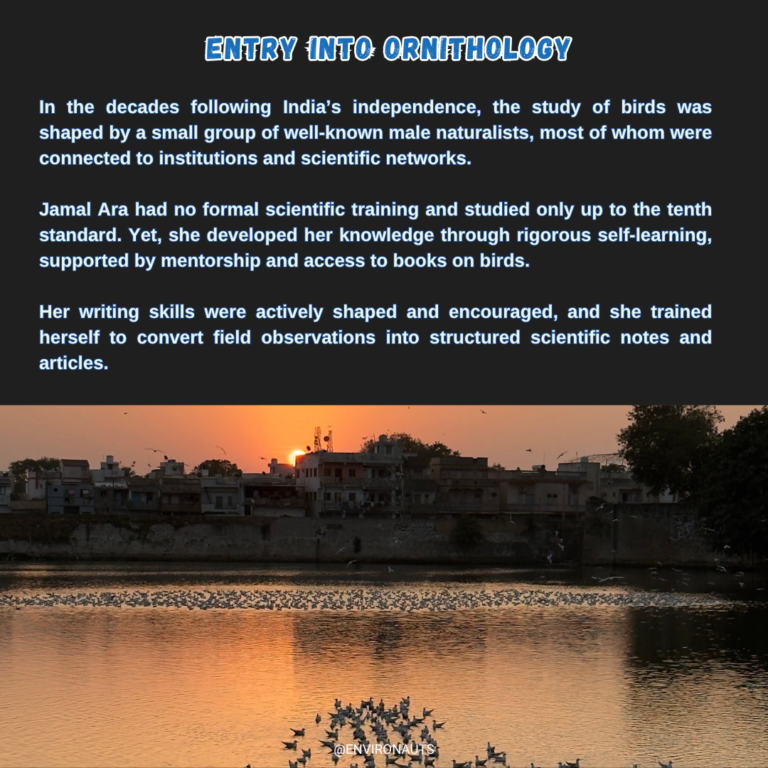
    In the decades following independence, Indian ornithology was dominated by a relatively small network of male naturalists, researchers, and institutional scientists. Access to journals, libraries, mentors, and field networks mattered enormously.

    Jamal Ara had almost none of those advantages.What she did have was persistence.

    According to later accounts, she received guidance in bird study from Mrs. E. M. Nicholson, whose mentorship helped shape her early understanding of how to observe and record birdlife. It was not formal university training, but it gave her an entry point into a world that was otherwise difficult to access.

    From there, Jamal Ara continued largely through self-learning.She read extensively.

    She trained herself to observe carefully. More importantly, she learned how to transform field observations into structured scientific notes, the kind that could withstand scrutiny in scientific journals.That transition matters more than it may initially appear.

    Many people observe nature. Very few learn how to document it systematically. Jamal Ara taught herself how to bridge that gap.

    The Forests of Chota Nagpur

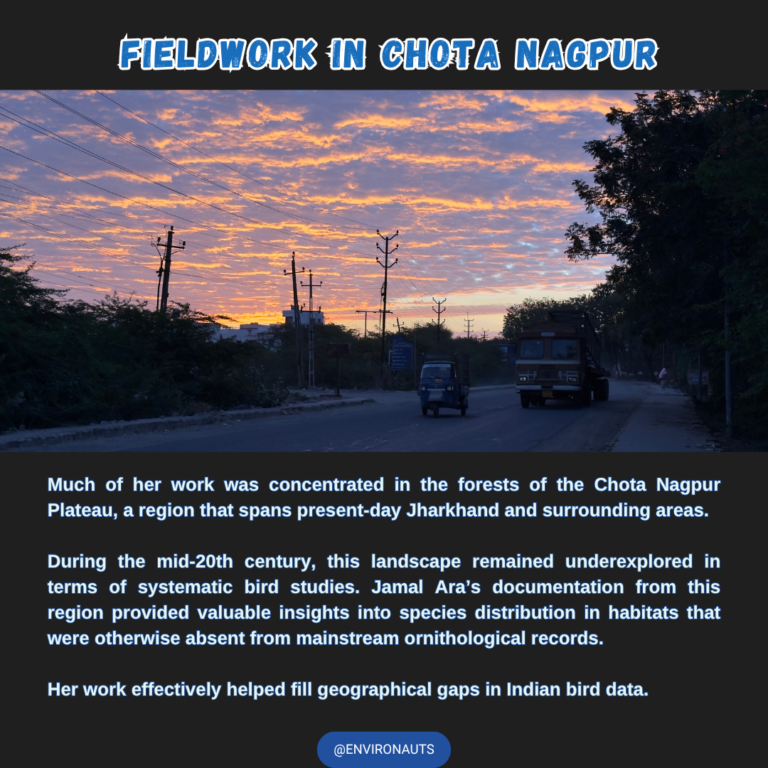
    Much of her work unfolded in the forests and landscapes of the Chota Nagpur Plateau, spanning parts of present-day Jharkhand and surrounding regions.

    At the time, these areas remained underdocumented in terms of systematic bird studies. Large portions of India’s biodiversity existed beyond the attention of mainstream scientific networks concentrated in urban centers. Jamal Ara worked in those overlooked spaces.

    She recorded species distribution, habitat behaviour, ecological patterns, and wildlife observations from regions where little formal documentation existed. Her work helped fill geographical gaps in ornithological knowledge during a period when even baseline ecological information for many areas remained incomplete.

    Unlike the image people often associate with science, laboratories, equipment, and institutions, her work was rooted in patience and field observation. Walking landscapes. Watching movements. Listening carefully. Writing things down before they disappeared.

    Writing Science Into the Record

    Over time, Jamal Ara published more than 60 articles, including contributions to the Journal of the Bombay Natural History Society.

    These were not casual nature essays. They were scientific observations: behavioural notes, habitat records, species documentation, and ecological studies that contributed to India’s growing body of ornithological knowledge.

    This achievement becomes even more striking when placed in historical context. She was operating in a field with very few women, limited institutional support, and minimal visibility. Yet her observations were considered rigorous enough to enter scientific circulation.

    That alone says something about the quality of her work.But Jamal Ara’s interests extended beyond birds.

    She also wrote and translated literary works, including translations of Punjabi writer Kartar Singh Duggal’s stories and novels. Her intellectual life moved across science and literature, suggesting a mind that resisted being confined to a single discipline.

    The Tragedy of Disappearance

    And then, much of it vanished. In the later years of her life, Jamal Ara struggled with severe mental health challenges and gradually withdrew from public and intellectual life. During this period, she destroyed a large part of her personal archive, diaries, manuscripts, field notes, and photographs accumulated across decades.

    What disappeared was not merely paper. It was a memory. Observation. Time.

    For researchers and historians, archives are often the only bridge between a person and posterity. Without preservation, even important work can fade into obscurity.

    That is exactly what happened to Jamal Ara. When she passed away in 1995, her name slowly receded from mainstream discussions in Indian ornithology. Unlike more institutionally protected figures, her legacy remained fragmented across scattered references, journals, and recollections.
    Only much later did renewed efforts begin attempting to piece together her story again.

    Why Her Story Matters Today.

    Why Her Story Matters Today.
    There is something deeply unsettling about the fact that we live in an age obsessed with information, yet still allow stories like hers to disappear.

    We often assume that significance guarantees remembrance. History repeatedly proves otherwise.

    Recognition depends not only on achievement, but on preservation of who gets archived, cited, documented, institutionalized, and continuously discussed. Jamal Ara’s story sits at the intersection of science, gender, memory, and loss.

    It reminds us that important knowledge does not always emerge from prestigious institutions. Sometimes it comes from people working quietly at the edges of visibility, documenting worlds others fail to notice. And it reminds us how fragile that knowledge can be.

    Today, when we hear birds at dawn, most of us will move on with our day without a second thought.

    But somewhere in India’s forgotten scientific history was a woman who listened closely enough to leave behind an entire body of work from those sounds.

    Even if history almost lost her.

    You may also like

    Section Title

    Will Cheetahs Run in Kutch Again?

    The Ghost That Roamed the Salt Flats On the edge of memory, in a grassland that time forgot…

    The Ghost That Roamed the Salt Flats

    There is a song that the Rabari shepherds of Kutch still sing. It doesn’t have a name, exactly…

    The Birdwoman History Almost Forgot

    The Birdwoman History Almost Forgot – The Story of Jamal Ara Author: Dharmik Bhatt Blog…

    Hello world!

    Welcome to WordPress. This is your first post. Edit or delete it, then start writing!…

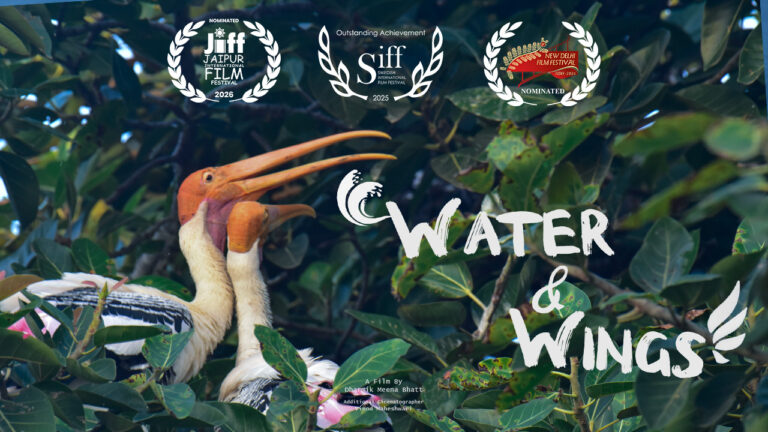
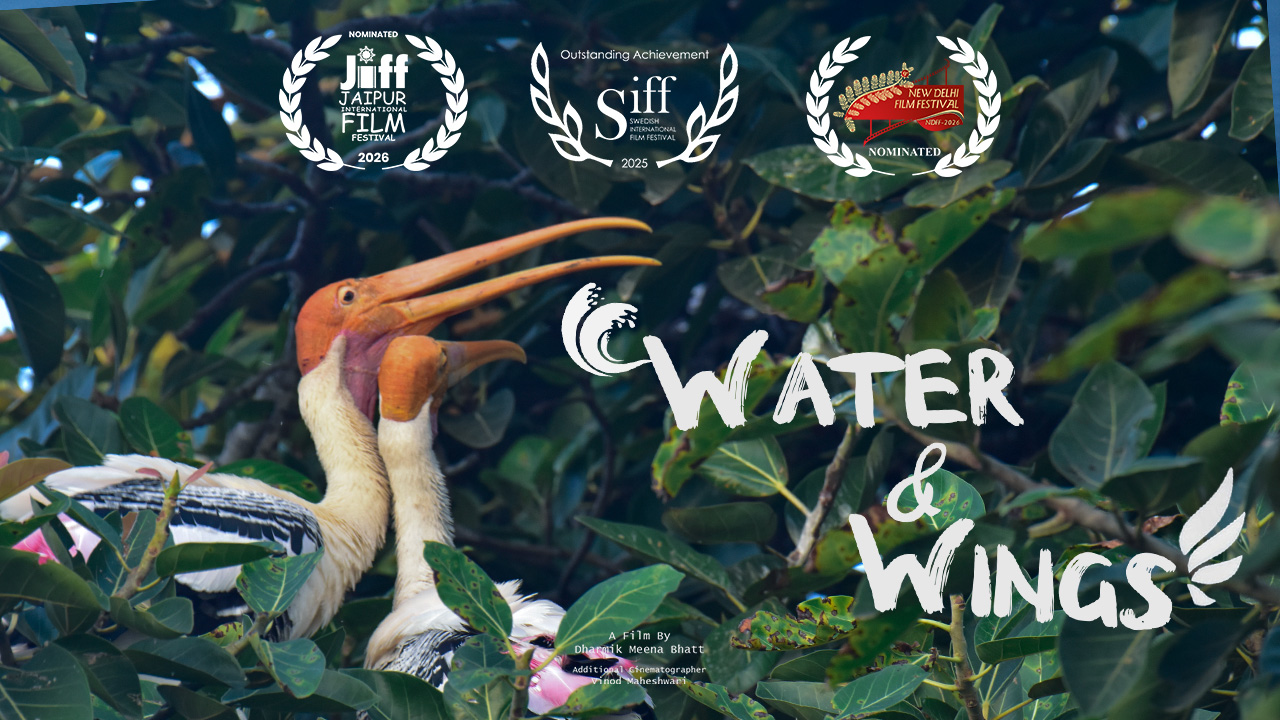
    Water and Wings Trailer

    Unveiling Water & Wings: A Journey Through Topansar Lake’s Beauty and Challenges Author: Monika…
  • Hello world!

    Welcome to WordPress. This is your first post. Edit or delete it, then start writing!

  • Water and Wings Trailer

    Water and Wings Trailer

    Unveiling Water & Wings: A Journey Through Topansar Lake’s Beauty and Challenges

    Author: Monika Joshi
    Blog Post

    Every once in a while, a story comes along that needs more than words to be told. At Secure Nature Society, we have always tried to express our work through clean-up drives, education programs, and conservation efforts. But this time, the story was bigger—it demanded a new medium. It needed the language of cinema.

    That is how Water and Wings was born.

    Directed and produced by Dharmik Meena Bhatt, the film is not just a documentary; it is a heartfelt journey into the connection between people, nature, and a place that holds meaning for us all. Watching Dharmik bring this vision to life has been inspiring. His ability to transform years of on-ground work into a visual narrative shows not only his creativity as a filmmaker, but also his commitment as an environmentalist.

    Behind the Lens

    As someone closely involved in the process, I had the privilege of seeing how much patience and precision this required. A documentary is not built overnight. It takes countless hours of research, filming in unpredictable conditions, waiting for the right light, and capturing those fleeting moments that reveal more than words ever could.Dharmik has carried this responsibility with dedication. He has managed to strike a delicate balance—remaining true to the authenticity of the subject, while weaving it into a cinematic experience that stays with you long after the screen fades to black.

    What the Film Represents
    Without giving away too much, I can say this: Water and Wings is not just about a lake. It is about resilience. It is about remembering what we often forget in the rush of our daily lives. And it is about seeing beauty and fragility side by side.This project is close to our hearts because it mirrors what Secure Nature Society stands for: awareness, action, and responsibility. And through Dharmik’s direction, that vision has taken a powerful form—one that can speak to audiences far beyond Mandvi.

    A Personal Note
    For me, being part of Water and Wings as creative consultant has been more than a role—it has been a reminder. A reminder of why I chose to serve as a trustee of Secure Nature Society, and why storytelling matters as much as science in conservation.As you await the release of this film, I hope you keep your curiosity alive. Because Water and Wings is more than something to watch—it is something to feel.

    You may also like

    Section Title

    Will Cheetahs Run in Kutch Again?

    The Ghost That Roamed the Salt Flats On the edge of memory, in a grassland that time forgot…

    The Ghost That Roamed the Salt Flats

    There is a song that the Rabari shepherds of Kutch still sing. It doesn’t have a name, exactly…

    The Birdwoman History Almost Forgot

    The Birdwoman History Almost Forgot – The Story of Jamal Ara Author: Dharmik Bhatt Blog…

    Hello world!

    Welcome to WordPress. This is your first post. Edit or delete it, then start writing!…

    Water and Wings Trailer

    Unveiling Water & Wings: A Journey Through Topansar Lake’s Beauty and Challenges Author: Monika…